


Stump Left After a DeLand Tree Removal

A tree can be gone and the yard still not finished. On a downtown DeLand lot the stump is often the part that stays, sitting next to a walk or a narrow side yard after the trunk is hauled off. Trees for the Fallen grinds those stumps below grade and puts the chips back in the hole so you can cover them. The grinder uses the drive or the walk, not a spin across a wet lawn.
That leftover is common on Woodland Boulevard, the Stetson streets, Spring Hill, and the lots toward Glenwood and Lake Helen. One street is an 80-year live oak. The next is a pine tract. If the tree is still standing — a live oak over an old roof, a laurel oak cracking at the union, a pine that lightning or beetles already started — that is a different job from a stump. Start with DeLand tree service and send photos of the whole tree, the base, and the access.
Why the stump is still there
Removal and grinding are not always the same visit. A lightning-struck pine or a tree with a split trunk comes out. A sound live oak over a porch may be reduced and kept, and a reduction costs less than taking the tree out. If the tree is already down, the stump is what is left in the ground. Downtown stumps sit next to a walk or a narrow side yard. Leaving it is reasonable if you are not planting, paving, or opening that gate. It is not reasonable if the stump is in the walk line or it is the only side access to the back.
We rig a removal away from porches and brick. We do not drop wood across a downtown sidewalk to save time. The grind is the finish, not the takedown. If a historic live oak can be reduced and kept, we say that before we price a removal. A stump grind does not save a cracked union. It only finishes a tree that is already out.
What fails on DeLand oaks and pines
Live oaks with limbs over sidewalks and old roofs are the downtown pattern. Laurel oaks crack at the unions. Pines on deeper lots, more toward Glenwood and Lake Helen than a Stetson street, fail after lightning or beetles. Magnolias and crape myrtles usually need a structure cut, not a topping. Topping is the cut that makes the next storm worse. We will not top a live oak to make it smaller. A reduction takes weight off the long limbs and leaves a tree. Topping grows weak sprouts back into the same space.
Deadwood, a little end weight off the long laterals, and clearance off the house is the prune. If the lean is in a cracked union over the roof, removal is the safer call. Sometimes a leaning oak can stay with a reduction, if the trunk and the roots are sound. We will say which one before you pay. West Volusia wind throws oak limbs onto old roofs and sidewalks. We clear the structure, then look at the rest of the tree with you before anyone talks about a takedown.
How the grind works on a small lot
Downtown stumps sit next to a walk or a narrow side yard. We grind below grade and put the chips back in the hole so you can cover them. The grinder uses the drive or the walk. It does not spin across a wet lawn to save a setup. That is the same approach on stump grinding jobs elsewhere in the service area: assess the access, grind below grade, and leave the hole ready to cover.
On a commercial lot downtown, if the tree is over the sidewalk or the street has to stay open, we schedule it when the block can take the truck. The shop is in Osteen. A tree on a house in DeLand is a same-day call when a crew is not already on another hazard. A stump that is not sitting on a structure is not that call. Permit and storm questions for this city start with the City of DeLand.
Photos that price the stump
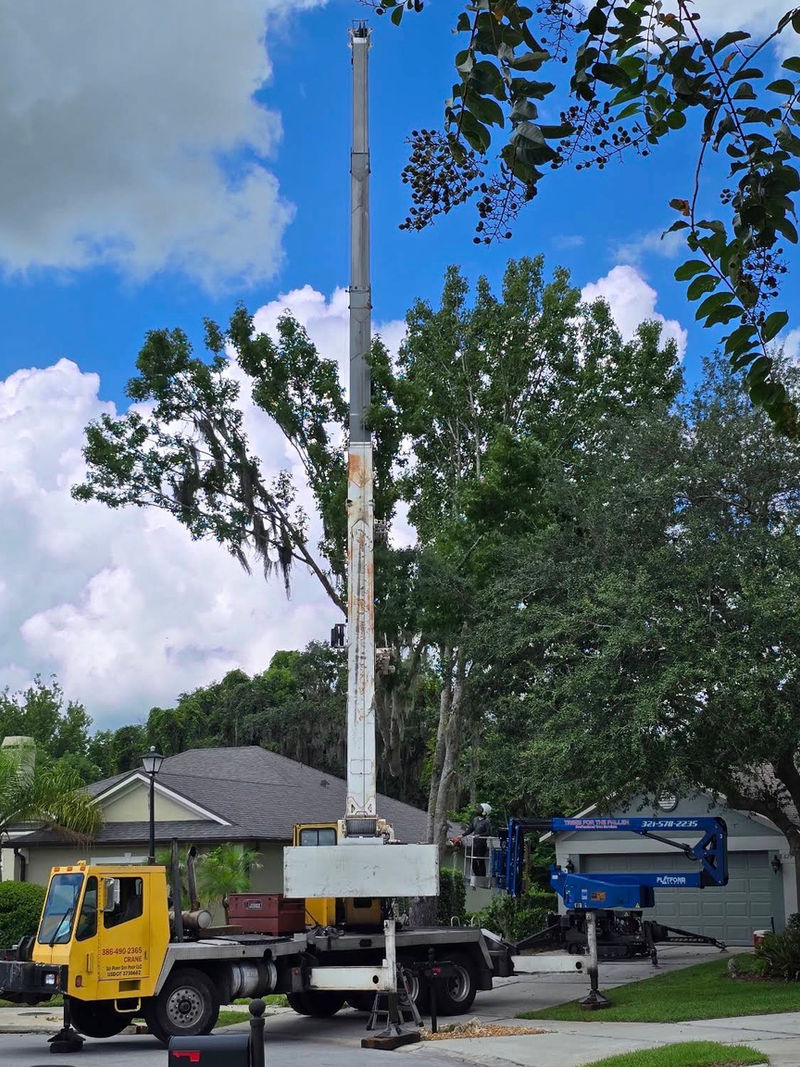
Photos of the whole tree, the base, and the access are enough to tell a normal removal from a crane day. For a stump, send the stump itself, the walk or gate beside it, and the path from the drive. Most DeLand removals on a normal lot fall between $900 and $2,500. A historic oak over a porch, or a crane day, is the work that reaches $4,500 to $5,500. A grind is priced from those photos. We do not quote a downtown stump from a guess about the gate.
Call or text (321) 578-2235 or request a tree service quote. Include the address and whether the stump is in the walk, the side yard, or open lawn. If you want the tree kept, say that in the same note. A site visit is only needed when the photos cannot show the access.
The Glenwood edge and neighboring lots
DeLand tree service splits in two. Downtown and the Stetson streets need an old live oak protected. The lots toward Glenwood and Lake Helen are often a pine that lightning or beetles already started. After that pine comes out, the stump is usually in a more open yard than a Woodland Boulevard walk, but the grinder still stays on the drive. The same leftover shows up on Deltona tree service lots after a pine comes out, especially where a side gate is the only way to the back.
Orange City and Lake Helen sit on the same edge of the map. A pine tract there is not a downtown sidewalk job, and we do not treat it like one. If the wood is still on the roof, that comes first. The stump can wait until the structure is clear and you have decided whether the rest of the tree stays.
What to send before the grinder rolls
Send three photos: the stump or the base, the walk or gate beside it, and the path from the driveway. Add the address, and say if irrigation, a brick walk, or a porch footing is inside a few feet of the stump. If any of the tree is still standing, add one photo of the whole crown and one of the union over the roof. That set is enough to tell a grind from a reduction from a removal.
Do not cut the stump flush yourself to make it look finished. A low cut does not remove the roots that heave a walk, and it can hide the width we need to see. Leave the stump as it is, keep the walk clear, and send the photos. We will say whether it is a grind, whether the tree should have stayed, and what the access does to the day.


Comments